Fondant vs. Buttercream: Which Costs More to Make?
Fondant vs buttercream cost comparison: fondant runs $10–$20 per cake vs $4–$8 for buttercream, and adds 2–4 hours of labor. Here is what that means for your pricing.
Quick Answer: Fondant costs significantly more than buttercream, both in ingredients ($10–$20 per cake vs. $4–$8) and in labor time (fondant adds 2–4 hours per cake). For most orders, buttercream produces a better profit margin unless fondant is specifically requested or required for the design.
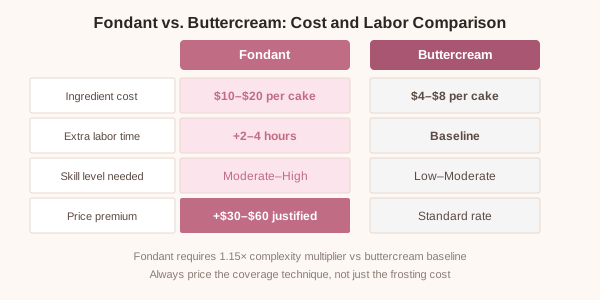
The fondant vs buttercream cost question comes up constantly for bakers who want to price accurately, and for clients trying to understand why a fondant-covered cake costs more. The answer is in both the materials and the time.
Let's put real numbers on it.
Ingredient Cost Comparison
Buttercream Ingredients for a Standard 8-Inch Cake
A two-layer 8-inch cake requires roughly 3 cups of buttercream: enough for filling, crumb coat, and a finished exterior coat with some decorative piping.
| Ingredient | Amount | Cost |
|---|---|---|
| Unsalted butter | 230g (1 cup) | $2.50 |
| Powdered sugar | 480g (4 cups) | $1.65 |
| Heavy cream | 60ml (¼ cup) | $0.55 |
| Vanilla extract | 5ml (1 tsp) | $0.76 |
| Salt, pinch | - | $0.01 |
| Total | $5.47 |
For a cake with piped decorations, add another 50–75% of this amount: $8.20–$9.57 total for a fully decorated buttercream cake.
Fondant Ingredients for the Same Cake
Covering an 8-inch, two-layer cake with rolled fondant requires approximately 700–800 grams of fondant for the exterior. You'll also use buttercream underneath as an adhesion layer.
Option 1: Store-bought fondant
A 2 lb (907g) container of commercial fondant (Satin Ice, Fondarific, etc.) costs $12–$16. For 750g coverage, that's roughly $10–$13 in fondant alone.
Option 2: Homemade marshmallow fondant
Made from marshmallows, powdered sugar, and a small amount of shortening. Cost for 750g: approximately $3.50–$4.50 in ingredients, which is significantly cheaper, but requires 30–45 minutes of additional prep and wrestling time.
| Covering Type | Material Cost |
|---|---|
| Buttercream (full decoration) | $5.50–$9.60 |
| Marshmallow fondant (homemade) + base buttercream | $7.50–$12.00 |
| Commercial fondant + base buttercream | $14.00–$20.00 |
Even homemade fondant costs nearly double buttercream once you account for the base layer. Commercial fondant can cost 2–4× as much as an equivalent buttercream finish.
Labor Time Difference
Ingredient cost is only part of the story. The bigger variable is time, and fondant almost always takes longer.
Buttercream Workflow
- Crumb coat: 15–20 minutes
- Chill time (30–60 min): non-labor, but blocks the schedule
- Final coat and smoothing: 20–35 minutes
- Decorative piping or details: varies by design
- Active decorating time: 40–60 minutes (excluding chill time)
Fondant Workflow
- Base buttercream layer (for adhesion and shape): 20–30 minutes
- Chill time (30–60 min): same as buttercream
- Roll fondant, cover cake, smooth sides: 30–45 minutes
- Repair any tears, fix bubbles, trim edges: 10–20 minutes
- Add fondant decorations, details, accents: varies
- Active decorating time: 60–95 minutes before any custom decorations
A simple fondant-covered cake with minimal decoration adds roughly 1–1.5 hours over a comparable buttercream cake. An elaborate fondant design with modeled figures or sculpted elements can add 3–6+ hours.
At a labor rate of $20/hour, that's $20–$120 in additional labor cost depending on complexity.
When Fondant Makes Financial Sense
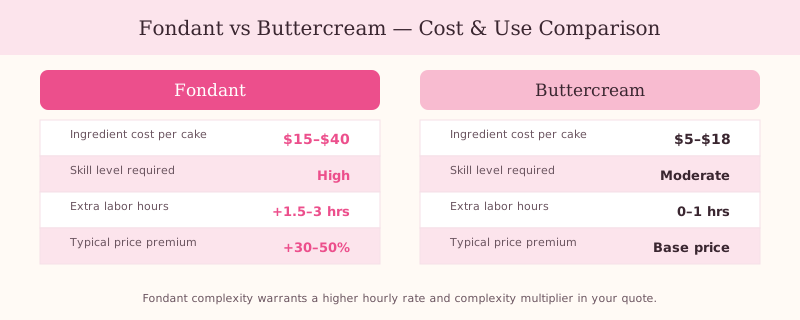
Fondant is not always the less profitable choice. There are situations where charging the fondant premium is well worth it.
Sculpted or 3D cakes. Fondant is essential for cakes shaped like objects: cars, characters, buildings. Buttercream can't hold those shapes. If you're offering sculpted cakes, fondant is the medium, and the price reflects it.
Extreme heat or travel conditions. Fondant holds up better in heat and humidity than buttercream. For summer outdoor events or long-distance delivery, fondant can be the right technical choice, and clients will pay for that reliability.
High-end visual aesthetics. A perfectly smooth fondant cake with crisp painted details has a look that's hard to achieve in buttercream. For clients who specifically want that finish, fondant is the product they're buying, and they expect to pay for it.
When to steer clients toward buttercream. If a client doesn't have a specific reason for fondant, buttercream is almost always the better value: better for them (it usually tastes better) and better for you (it takes less time and costs less to produce). A fondant-covered cake that your client then peels off at the reception is a waste of materials and time.
How to Price the Difference
Build the fondant premium into your quote as a transparent line item, not a vague "fondant surcharge." Here's how that looks in practice.
Base 8-inch birthday cake, buttercream:
- Ingredients: $15 (cake + buttercream)
- Labor: 3.5 hours × $20 = $70
- Overhead: $5.50
- Subtotal: $90.50 × 1.20 margin = $108.60
Same cake, commercial fondant covering:
- Ingredients: $15 (cake) + $16 (fondant) + $5.50 (base buttercream layer) = $36.50
- Labor: 5 hours × $20 = $100 (added 1.5 hours for fondant work)
- Overhead: $5.50
- Subtotal: $142 × 1.20 margin = $170.40
The fondant version costs $62 more, which is the right answer. The materials cost $21.50 more, the labor cost $30 more, and the margin added $10.50 more. Every one of those differences is real and justified.
Use our cake pricing calculator to plug in your specific ingredient costs and time estimates for both finishes: the output will show you exactly what each version should sell for.
Taste, Aesthetics, and the Client Conversation
Fondant divides opinion sharply. Some clients love the look; many don't love the taste. Having an honest conversation upfront saves frustration later.
A few things worth mentioning when a client requests fondant:
- Commercial fondant has a sweet, slightly artificial flavor. Some brands are better than others.
- Homemade marshmallow fondant is milder and often preferred by clients who've had bad fondant experiences.
- The fondant is typically removed before eating, which means the investment is purely aesthetic.
- If the design can be achieved in buttercream, it will usually taste better and cost less.
That's not a sales pitch. It's useful information for the client to have before committing.
Making the Numbers Work for Both Finishes
Buttercream is almost always the higher-margin choice when all costs are counted. That's worth knowing when you're building your service menu and deciding which types of cakes to promote.
But fondant is the right tool for certain jobs, and when you price it correctly (materials, labor, and margin all included) it's profitable work. The mistake is treating fondant as a small add-on when it can easily double the labor cost of a cake.
Get a clear picture of what your fondant vs. buttercream cakes should sell for by running both through the calculator: check your cake pricing here. If you're also working out your broader pricing strategy, the home baker pricing walkthrough covers the full four-component method. And if you're seeing margin problems across multiple cake types, the 7 cake pricing mistakes post covers the most common reasons why.
Find out more about our team and how this tool was built.