Seasonal Cake Pricing: Charge More at the Right Times
Seasonal cake pricing lets you earn more during peak demand without losing clients. Learn which seasons justify higher rates and how to communicate changes professionally.
Quick Answer: Seasonal cake pricing means raising your rates during high-demand periods (Valentine's Day, spring wedding season, Mother's Day, and December) when order volume peaks and ingredient costs rise. A 10–20% seasonal increase during these windows is standard and defensible.
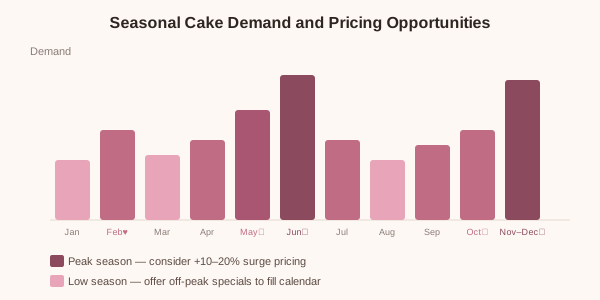
Every baker knows that February feels different from September. The inquiry volume is different. The ingredient availability is different. The number of clients asking for the exact same design (because they all saw the same trend on social media) is very different. Seasonal cake pricing accounts for that reality.
Charging the same price year-round when demand fluctuates significantly means you're leaving money on the table in your busiest months and potentially working yourself ragged for the same rate you charge on a slow Tuesday in November. That's not a sustainable way to run a baking business.
The High-Demand Seasons You Need on Your Calendar
Not every holiday creates a meaningful surge in cake orders, but several reliably do, and they follow a predictable pattern year to year.
Valentine's Day (Early February)
The two-week window before February 14th is one of the most compressed demand spikes of the year. Orders for heart-shaped cakes, red velvet designs, and pink-themed confections flood in, often with short lead times. Clients are emotionally motivated and less price-sensitive than usual. A 10–15% rate increase for orders delivered February 10–14 is standard in the industry.
Easter (Late March or April)
Easter triggers demand for decorated cakes and themed desserts, often with less lead time than Christmas-level holidays. Spring flavors (lemon, carrot, lavender) see a corresponding ingredient demand spike, which can push costs up 8–12% compared to mid-winter.
Mother's Day (Second Sunday in May)
Mother's Day is one of the highest single-event cake order days of the year for many home bakers. Orders tend to cluster in the final week before the holiday. Demand significantly outpaces supply of available baker hours, which is textbook justification for a price increase.
June Wedding Season
The June wedding peak is the longest sustained high-demand period bakers experience. Wedding cake bookings made months earlier execute in June, plus a wave of birthday, anniversary, and graduation orders runs simultaneously. If you do wedding cakes, June slots should carry a premium booking rate, and standard orders during peak weekends can reasonably be priced 15–20% higher.
Halloween (October)
Halloween has grown substantially as a cake holiday. Sculpted pumpkins, fondant monster cakes, and elaborate decorated tiers all require time and skill. The compressed timeline (most orders want delivery the last weekend of October) creates a natural scarcity of baker time.
December Holiday Season
December is the other sustained high-demand period. Christmas cake orders, holiday party tiers, New Year celebration cakes, and Hanukkah orders all compete for baker capacity from roughly December 1–23. Ingredient costs also peak in December: butter, cream, and vanilla extract all see seasonal supply pressure.
How Supply Chain Affects Seasonal Ingredient Costs
Ingredient prices are not fixed. Butter and dairy products see their most significant price swings in spring (when dairy herds transition) and winter holidays. Vanilla extract (one of the most volatile ingredients in baking) can fluctuate 15–25% year-over-year based on Madagascar harvest cycles.
Eggs see price increases in winter and again in spring. Real fruit ingredients (fresh strawberries, raspberries, peaches) are sharply seasonal: out-of-season fresh fruit can cost 3–4× the peak-season price.
Track your ingredient costs month-by-month for one year and you'll see a clear seasonal pattern. During high-cost months, your base ingredient cost is higher, which means your cost-based price should be higher even before any demand-driven adjustment. Accurate ingredient cost tracking is the foundation that makes seasonal pricing adjustments defensible rather than arbitrary.
A Surge Pricing Strategy That Works
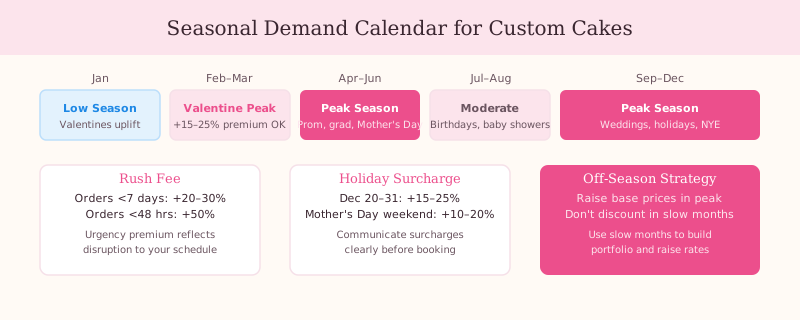
Surge pricing in baking doesn't mean gouging. It means pricing to reflect the actual supply and demand in your market during a specific window.
A practical approach with three tiers:
Standard rate: Your year-round base price, calculated from ingredients + overhead + labor + margin. This is the price you charge during low-to-moderate demand periods.
Seasonal rate (Tier 1, moderate surge): Standard rate × 1.10 to 1.15. Apply this during Easter, Halloween, and Mother's Day. Represents a 10–15% increase that most clients accept without significant friction, especially if communicated in advance.
Peak rate (Tier 2, high surge): Standard rate × 1.15 to 1.20. Apply this for Valentine's Day, June wedding Saturdays, and the December 15–23 window. A 15–20% premium for your most in-demand slots is consistent with what the market supports in most areas.
Rush fee (additive): Any order placed within 5 days of the requested delivery date during a peak season gets a flat rush fee of $25–$50, in addition to the seasonal rate. Short-lead orders during peak windows consume your most constrained resource (available hours) at the worst possible time.
You can estimate your cake costs at both your standard and seasonal rates to see exactly how the price difference lands for typical orders.
Booking Deposits as a Seasonal Tool
Deposits do two things: they confirm client intent, and they give you cash flow before the work begins. During peak seasons, they also function as a commitment mechanism that prevents calendar-filling no-shows.
Standard deposit structure for seasonal peak periods:
- Valentine's Day and Mother's Day: 50% non-refundable deposit required to hold the date. Final payment due 5 days before delivery.
- June weddings: 30–50% deposit at booking (often 6–12 months out), with remaining balance due 2 weeks before the wedding date.
- December orders: 50% deposit to hold slot, full payment due December 10th.
Non-refundable doesn't mean adversarial: explain clearly in your booking process that deposits cover the cost of reserving your time and purchasing specialty ingredients that may be ordered specifically for their order. Most clients understand this.
How to Communicate Seasonal Price Changes
The key word is advance notice. Clients who learn about a price increase when they're placing an order feel surprised and possibly taken advantage of. Clients who knew months earlier that your rates change during peak periods have already factored it into their planning.
Three communication approaches that work:
Seasonal pricing notice on your booking page or menu: A brief line such as "Rates for February 10–14, Mother's Day weekend, and December 15–23 orders are subject to seasonal pricing. Contact me for a custom quote during these periods." This sets expectations without making it feel punitive.
Email to existing clients in November and January: A simple note that your peak-season pricing will take effect soon, with your rate sheet or updated pricing page linked. Clients who've ordered before appreciate the heads-up.
Conversation-level framing: When a client asks about availability during a peak period and you quote the seasonal rate, a brief explanation is all that's needed: "December is my busiest period, so pricing reflects peak-season rates: that's $X for the size and design you're describing." State it matter-of-factly, not apologetically.
Avoid lengthy justifications. You don't need to explain your entire cost structure to a client asking for a price. The rate is what it is.
Off-Peak Strategies to Stay Booked Year-Round
High-demand seasons make peak pricing possible. Off-peak periods (January, March (early), June weekdays, September, and November) present the opposite challenge: how to fill your calendar when inquiry volume drops.
A few approaches that work:
Offer off-peak incentives selectively. A 10% discount on orders booked during the first two weeks of January isn't undercutting your pricing: it's smoothing your annual cash flow. Offer it to existing clients or email subscribers, not as a public advertised discount.
Promote lower-tier cakes for smaller gatherings. Smash cakes, 6-inch celebration cakes, and dessert boxes all have lower per-order prices but can fill your calendar during slow weeks with minimal risk.
Build in skill development time. Treat a genuinely slow week as an investment window: practice a new technique, refine a recipe, test a new flavor combination. That skill development pays dividends in peak season rates.
Reach out to event planners and corporate clients. Corporate celebration orders (team birthdays, office milestones) often don't follow the same seasonal pattern as consumer demand. A relationship with one active corporate client can mean 4–8 orders per quarter that fall entirely outside peak windows.
Read the cake pricing mistakes to avoid post for the specific errors that cost bakers money across all seasons, and how to price a cake as a home baker for the foundational pricing framework that seasonal adjustments build on top of. Visit our about page to learn more about how we built the tool used by bakers to run these calculations.
Seasonal Pricing Is Good Business
Adjusting your rates to reflect real demand and real cost fluctuations isn't opportunism: it's how markets work. Hotels charge more on holiday weekends. Florists charge more on Valentine's Day. Photographers charge more in June. Bakers have every legitimate reason to do the same.
The clients who value your work will book early and pay the seasonal rate. The clients who balk at a 15% increase during your busiest week of the year were probably never your best clients to begin with.
Price seasonally, communicate clearly, and spend your peak weeks doing the work you trained for at rates that make it worthwhile.